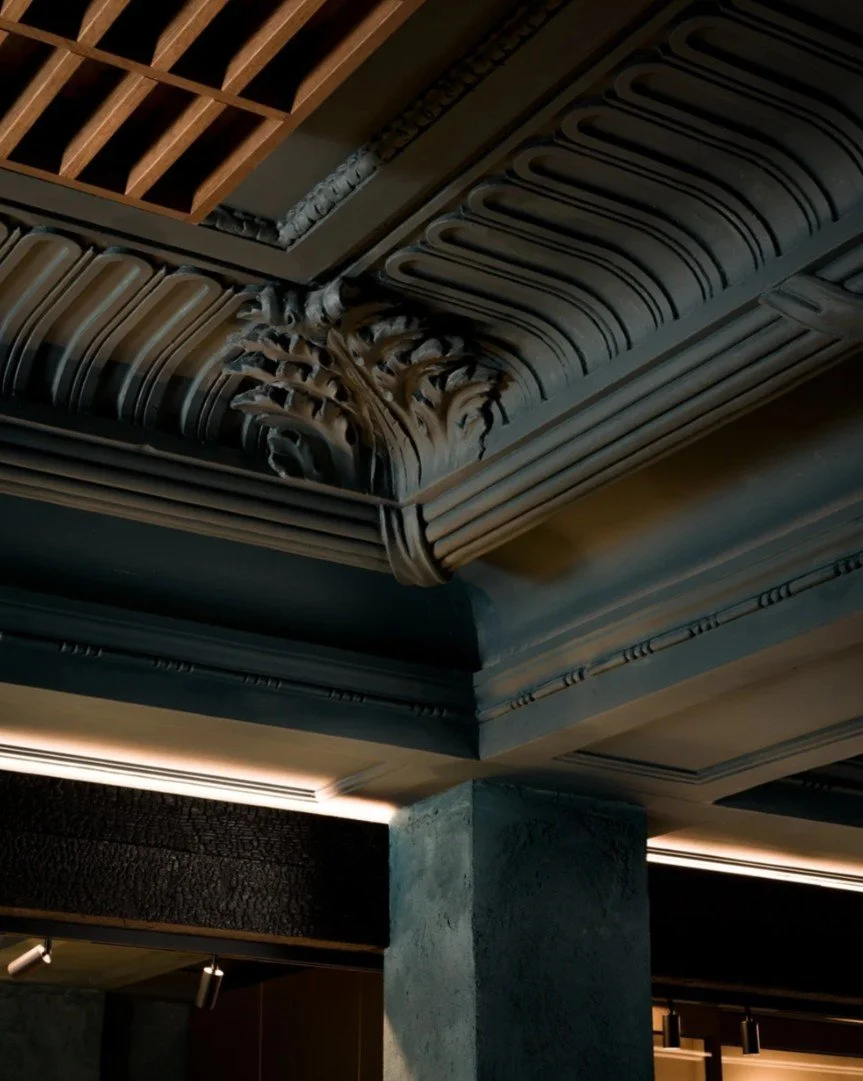
A Landmark Jul’s Restaurant in a listed building in
London, Westminster, SW1Y 4AU
A Landmark Restaurant at 11 Waterloo Place, Westminster
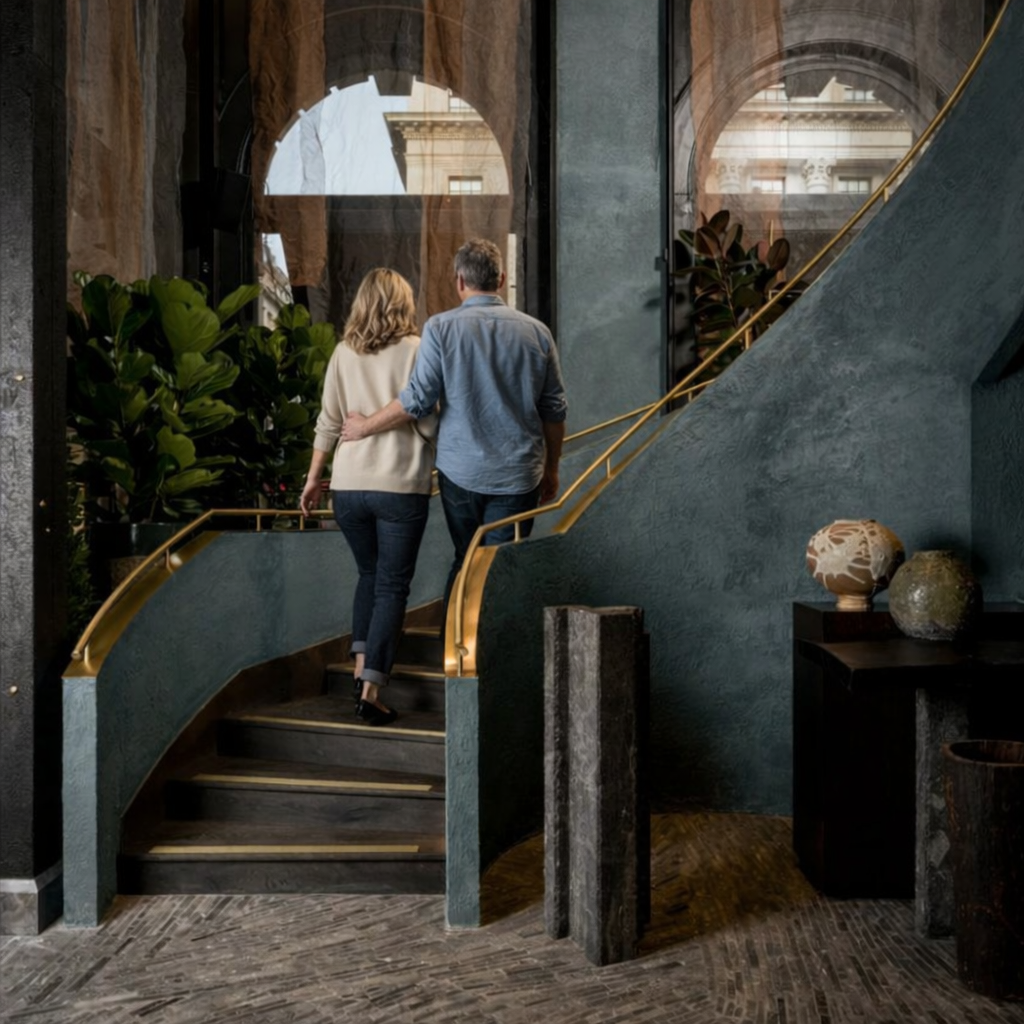
Urban Context and Westminster Setting
Designing Within a Heritage Framework
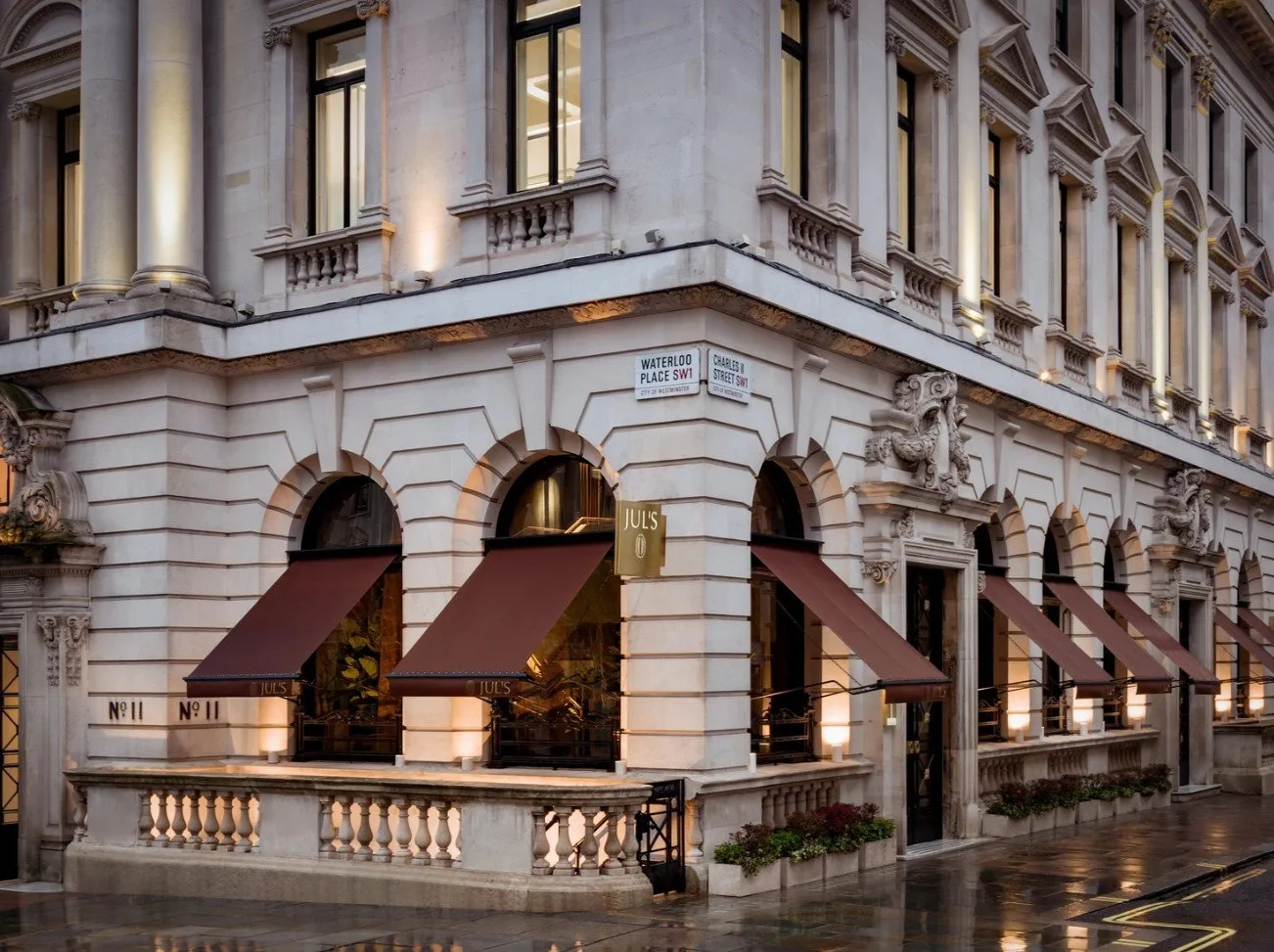
The restaurant sits within a conservation‑sensitive area. Our design respects:
the classical façade
the civic character of Waterloo Place
the architectural rhythm of St James’s
Westminster’s planning expectations
Enhancing the Street Presence
Warm lighting, subtle signage, and carefully framed interior views create a welcoming presence without overwhelming the historic façade.
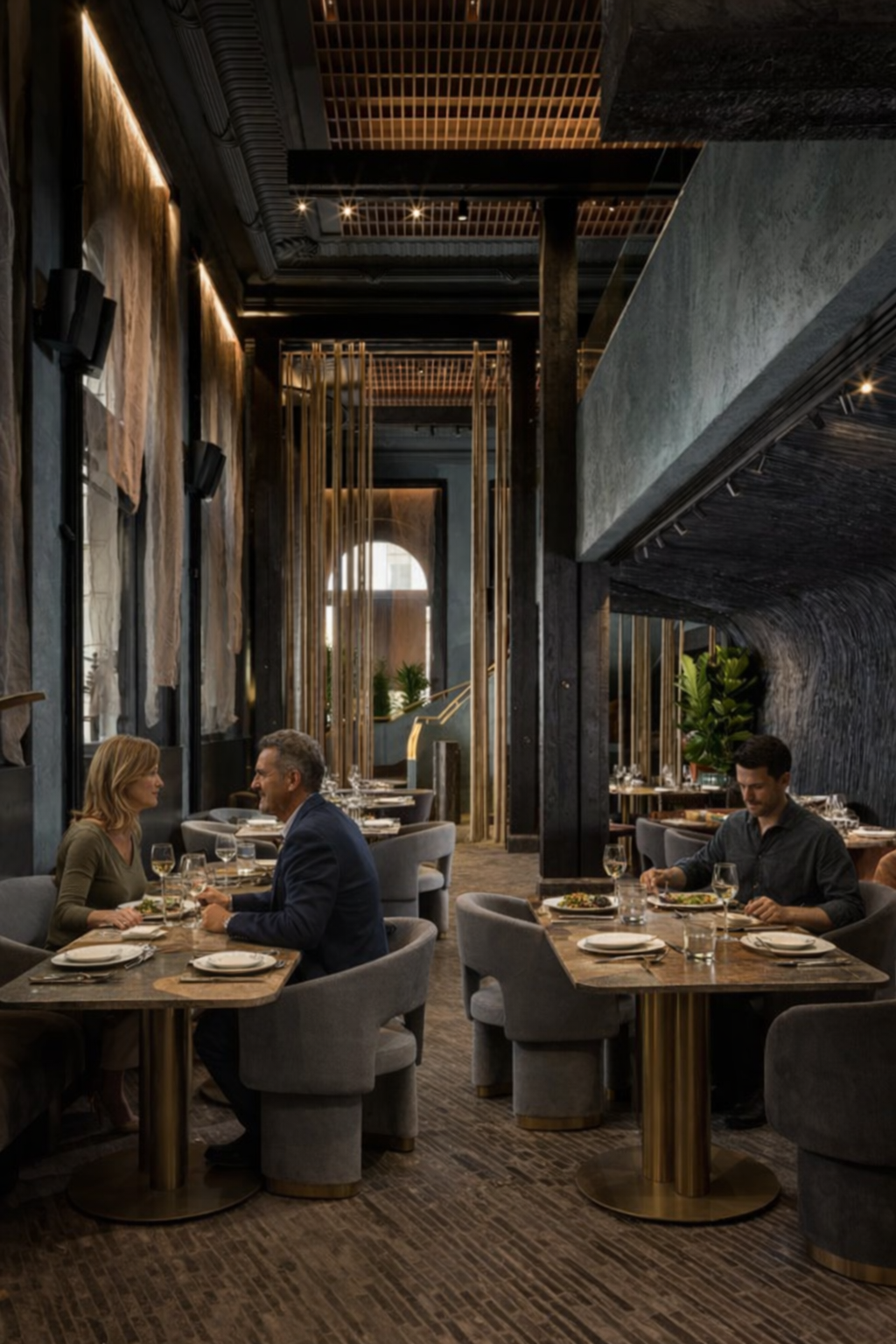
A Complete Architectural and Interior Transformation
The newly opened restaurant at 11 Waterloo Place, Westminster, London SW1 represents a full architectural and interior reinvention of a historically significant corner building in the heart of St James’s. Designed by MBBM Studio Architects, the project brings together heritage sensitivity, contemporary hospitality design, and a deeply layered material palette to create one of central London’s most atmospheric new dining destinations.
Located at the junction of Waterloo Place and Charles II Street, the building sits within one of Westminster’s most architecturally distinguished urban ensembles. The area is defined by classical façades, civic monuments, and a long tradition of cultural and diplomatic institutions. Our design approach respected this context while introducing a modern, luxurious, and immersive interior world that contrasts deliberately with the building’s formal exterior.
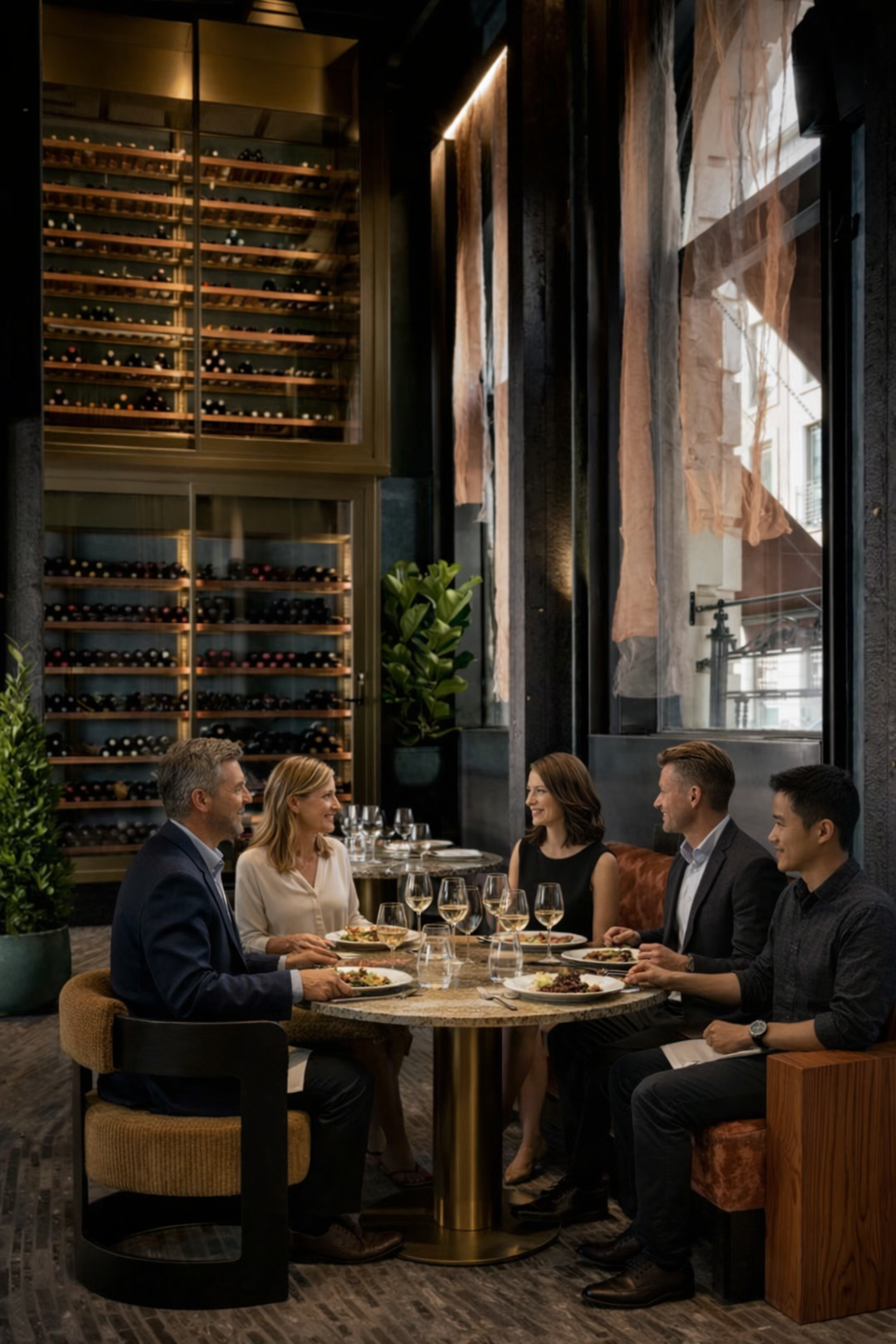
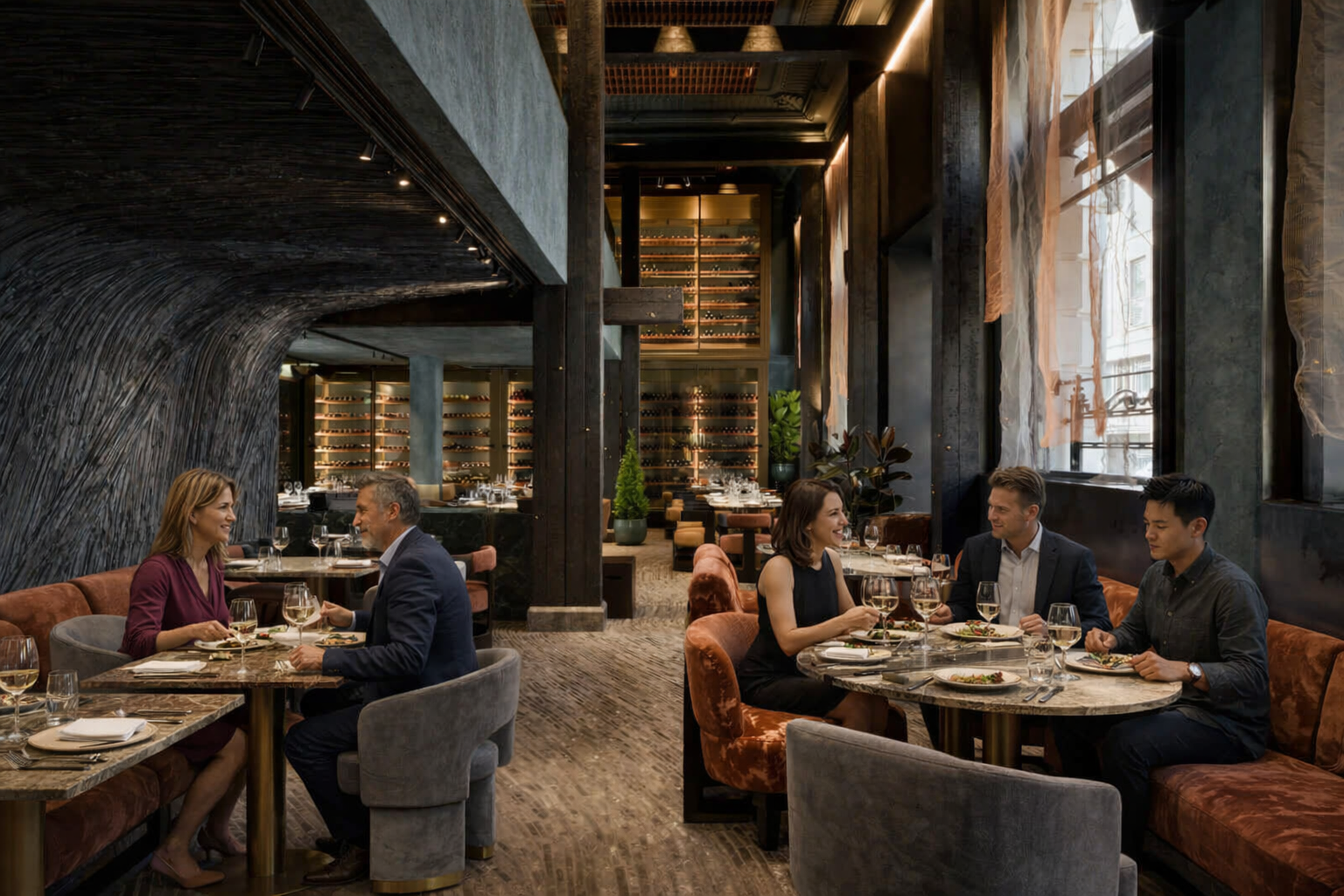
The restaurant is conceived as a sequence of spatial experiences—from the street‑facing façade to the sculptural staircase, the wine‑lined dining rooms, the intimate private areas, and the richly detailed washrooms. Each space is designed to feel distinct yet connected through a consistent architectural language of warm metals, textured plaster, stone, timber, and controlled lighting.
Architectural Detailing, Craftsmanship & Luxurious, Unexpected Interior Moment
Timber appears in ceiling lattices, joinery, and wall panels. It provides acoustic absorption, visual warmth, material contrast, a grounding natural element.
Guest Experience and Atmosphere, Material Palette and Craftsmanship
Stone, Marble, and Mineral Surfaces
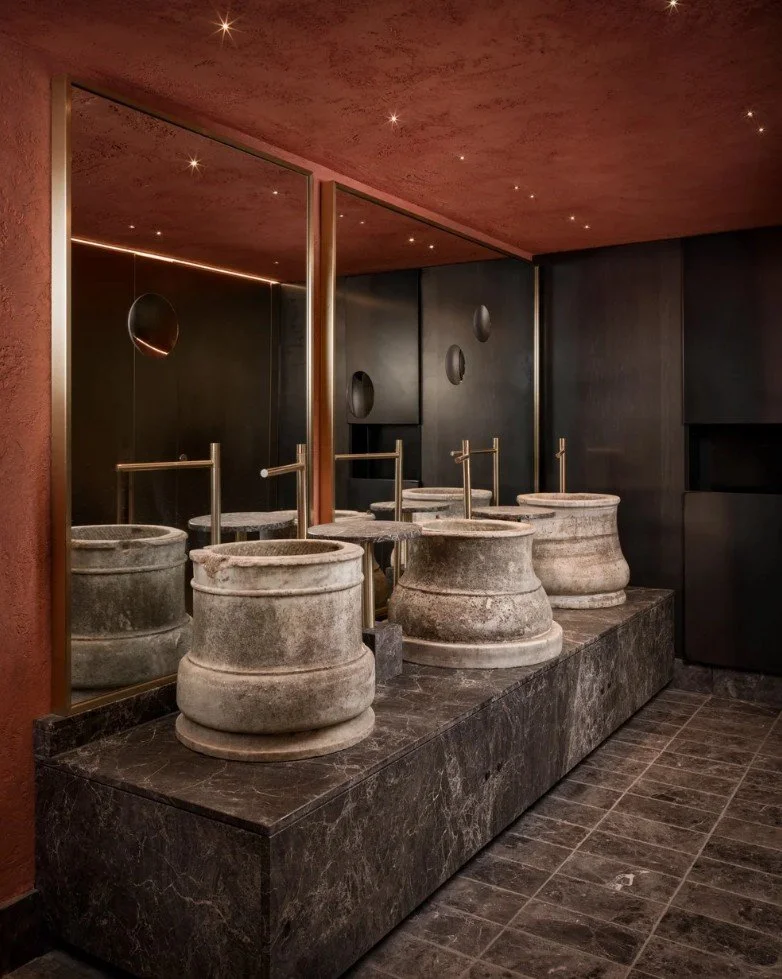
Stone plays a central role in the design, appearing in tabletops, bar counters, washroom basins & flooring transitions
The stone selection emphasises texture, veining, and natural variation, reinforcing the restaurant’s tactile identity.
Brass and Warm Metals
Brass is used throughout the project as a unifying material staircase balustrades, vertical fins, lighting trims, mirror frames, tapware Its warm reflectivity enhances the lighting strategy and adds a sense of crafted luxury.
Architectural Vision and Design Philosophy
Respecting the Classical Façade
The exterior of 11 Waterloo Place is a textbook example of late‑19th‑century Westminster architecture: stone pilasters, carved capitals, arched windows, and a strong civic presence. Our intervention preserved the façade entirely, working within the constraints of a heritage‑sensitive environment while ensuring the restaurant’s identity is clearly expressed through subtle signage, warm lighting, and carefully framed views into the interior.
Creating a Modern Interior World
Inside, the design shifts intentionally. The restaurant becomes a contemporary sanctuary, defined by:
sculptural forms
warm, low‑glare lighting
rich material contrasts
curated views
immersive spatial layering
The design philosophy is rooted in material honesty, sensory depth, and architectural storytelling. Every surface, junction, and lighting element contributes to a cohesive narrative of warmth, intimacy, and refined luxury.